

Radical Circularity: Moving Beyond Recycling
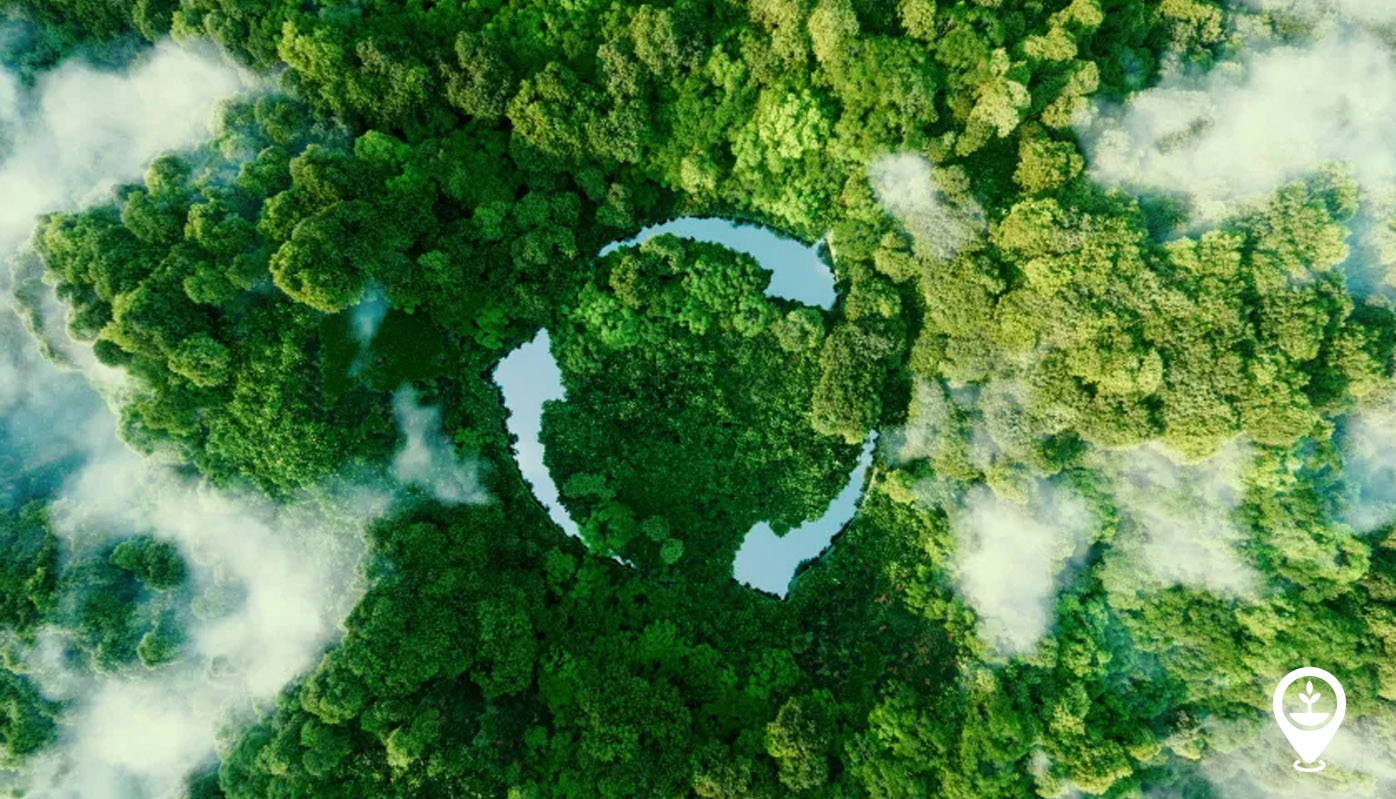
What if we told you that only 9% of all plastic ever produced has actually been recycled? The rest sits in landfills, floats in oceans, or gets incinerated. Recycling is just one piece of the puzzle. The real question to be asking is how to stop creating waste in the first place.
This is where radical circularity comes in: a fundamental reimagining of our relationship with materials, resources, and the living world itself.
Nature’s original design
Walk into an old-growth forest and try to find waste. You likely won’t! Dead trees become nurse logs for seedlings. Fallen leaves decompose into nutrient-rich soil. Fungi break down organic matter and redistribute resources through underground mycelial networks spanning acres. Every output from one organism becomes input for another. The forest operates as a perfectly calibrated circular economy, and it’s been doing so for millions of years.
This is the blueprint we abandoned during the Industrial Revolution. We replaced nature’s circles with straight lines: extract resources, manufacture products, use them briefly, then discard. This “take-make-waste” model has given us unprecedented convenience and catastrophic consequences. The global economy consumes over 100 billion tons of materials annually, yet only 8.6% of these materials are cycled back into use.
Radical circularity means returning to nature’s wisdom through sophisticated design that mimics ecological intelligence.
Why recycling falls short
Recycling is better than landfilling, but let’s be honest about its limitations. Most recycling is actually “downcycling”: degrading materials into lower-quality products that themselves cannot be recycled again. Your plastic bottle becomes a park bench that will eventually end up in a landfill anyway.
The process is also resource-intensive. Recycling facilities require enormous amounts of energy and water. Contamination rates are high: one greasy container can ruin an entire batch of recycling. And the global recycling trade has revealed uncomfortable truths: for decades, wealthy nations shipped their recycling to countries in Asia and Africa. Before 2018, China was importing two-thirds of the world’s plastic waste (UN Environment Programme, 2019). When China’s National Sword policy banned most imports, the waste crisis shifted to Southeast Asia, then to Turkey and Poland, revealing that much “recycling” was simply waste colonialism in disguise.
Designing waste out of existence
True circularity starts at the design phase. The Cradle-to-Cradle framework, developed by architect William McDonough and chemist Michael Braungart, asks: what if every product was designed to be either safely composted or endlessly recycled without degradation?
This means rethinking everything. Instead of gluing phone components together, design them to snap apart for easy repair and material recovery. Instead of mixing synthetic and natural fibers in clothing (making recycling impossible), keep material streams pure. Instead of packaging food in mixed-material pouches, use mono-materials or truly compostable alternatives.
Companies like Patagonia have embraced this philosophy with their Worn Wear program, which repairs, refurbishes, and resells used gear, keeping materials in circulation far longer than the typical “buy-use-discard” cycle. Interface, a carpet manufacturer, pioneered a take-back program that reclaims old carpets and transforms them into new ones, creating a closed-loop system that has diverted millions of pounds of material from landfills.
Circular business models
Radical circularity also transforms how we do business. Product-as-a-service models—where companies retain ownership and lease products to customers—incentivize durability and repairability. Why would a lighting company that leases fixtures design them to fail when they’re responsible for maintenance and replacement?
Regenerative agriculture takes this principle to our food systems. Instead of depleting soil through chemical-intensive monoculture, regenerative farms build soil health through practices like cover cropping, composting, and rotational grazing. These farms actively improve ecosystems, sequestering carbon, restoring watersheds, and supporting biodiversity.
Regenerative farms can sequester up to 1.3 tons of carbon per acre annually, turning agriculture from a climate problem into a climate solution.
The forest connection
This is where tree planting enters the circular equation as an investment in Earth’s fundamental circularity infrastructure.
Forests are carbon recyclers, pulling CO₂ from the atmosphere and storing it in wood, leaves, and soil. They’re water recyclers, capturing precipitation, filtering it through soil, and releasing it slowly into watersheds. They’re nutrient recyclers, building soil fertility year after year. A single mature tree can absorb approximately 48 pounds of CO₂ per year, but its circular benefits extend far beyond carbon accounting.
When we plant trees with ecological intention—prioritizing native species, supporting biodiversity, and restoring degraded ecosystems—we’re rebuilding the living infrastructure that makes all other cycles possible. Healthy forests create microclimates that support agriculture. They prevent erosion that would otherwise choke waterways. They provide habitat for pollinators that fertilize crops.
In the end, circularity is about relationships, dependencies, and interconnected systems. Every tree planted strengthens these connections.
Becoming circular citizens
So what does radical circularity look like in daily life? It starts with a shift in identity from consumer to steward. Instead of asking “how do I dispose of this responsibly?” ask “should this exist at all?”
Buy less, but choose well. Seek out products designed for longevity and repair. Support companies with transparent, circular supply chains. Embrace the repair culture: visit community repair cafés, learn to mend clothing, fix what breaks before replacing it.
Compost your organic waste. Food scraps become soil amendments, which grow more food, which feeds you and eventually returns to soil. Composting can divert up to 30% of household waste from landfills (EPA), but more importantly, it reconnects us to regenerative cycles we’ve forgotten.
Support refill stations and package-free stores. Choose local food systems where you can see the circular relationships between farm, table, and compost. Vote with your wallet for businesses that view waste as a design failure, not an inevitability.
Ask better questions: Can this product return safely to soil? Can its components be separated and reclaimed? Does this purchase support regenerative practices or extractive ones?
Thinking in circles
The transition from a linear economy to a circular one represents more than logistical reorganization. It’s a cultural evolution. It requires long-term thinking in a world addicted to quarterly returns. It demands systemic solutions in a culture of individual convenience. It asks us to see ourselves not as apex consumers but as participants in living systems.
Every tree you plant is a vote for circularity. Every product you refuse to buy breaks a linear chain. Every time you choose repair over replacement, you’re practicing the oldest economics on Earth.
Recycling was never the destination. It was a rest stop on the journey toward something more fundamental: learning to live within the cycles that sustain all life. The forests have been showing us how all along. It’s time we started paying attention.