

How Urban Trees Can Keep Our Cities Livable
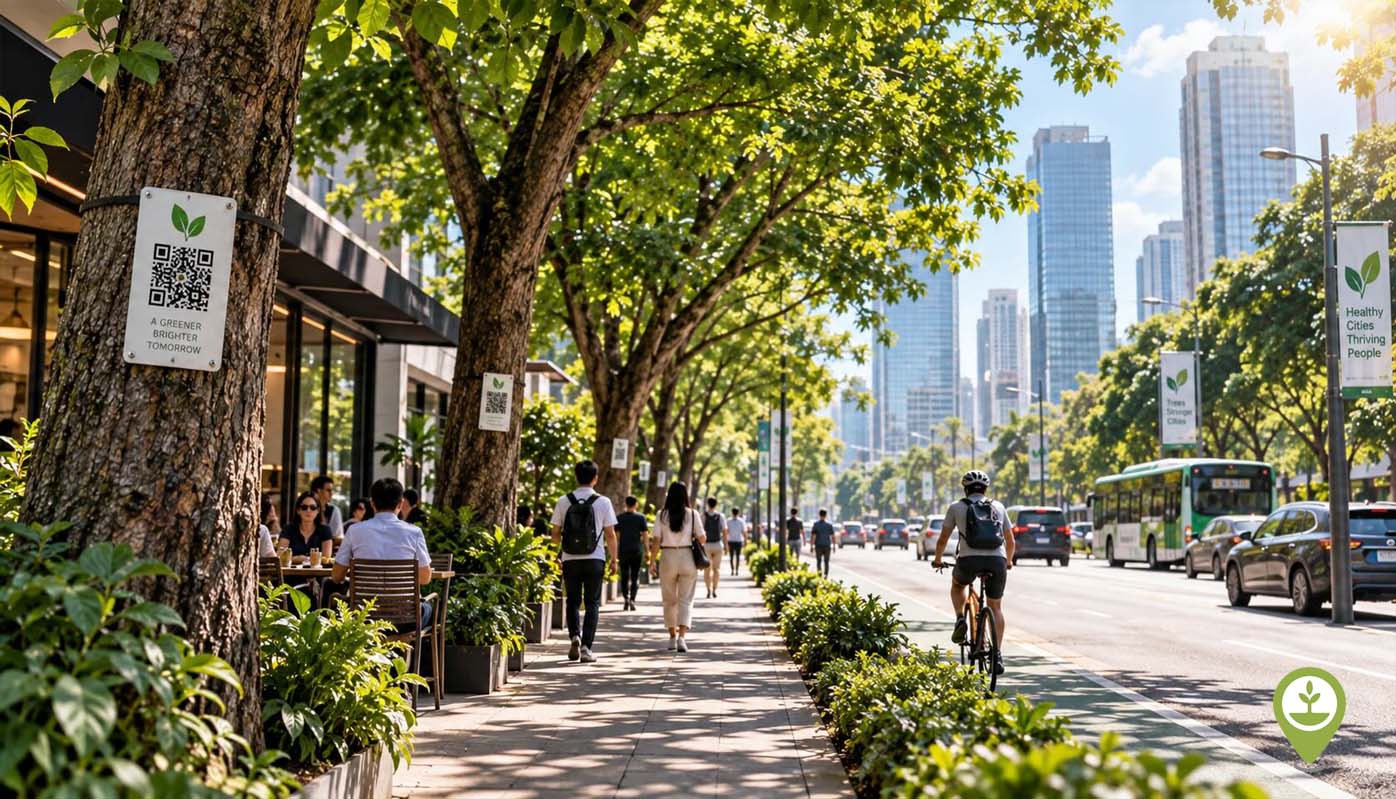
Step out of an air-conditioned building onto a city street during a heatwave, and the difference can be immediate. Asphalt radiates heat. Concrete walls feel warm to the touch. Glass reflects sunlight back onto the street. Even after sunset, the city can seem reluctant to cool down.
This is the urban heat island effect, and as heatwaves become more frequent and intense, it is becoming an increasingly important challenge for cities around the world. Buildings, roads, pavements, and other hard surfaces absorb solar energy during the day and release that heat slowly, including well into the night. Urban areas can therefore remain significantly warmer than surrounding rural areas.
The consequences go far beyond discomfort. Extreme urban heat can increase demand for air conditioning, place pressure on electricity grids, make outdoor work more dangerous, and increase health risks, particularly for older people, children, and those with existing health conditions.
One of the most effective tools available to cities is also one of the oldest: trees.
How Trees Cool a City
Trees cool their surroundings in two important ways.
The first is simple: shade. A mature tree canopy intercepts sunlight before it reaches roads, pavements, buildings, parked cars, and people. Shaded surfaces absorb less solar radiation and therefore remain cooler than surfaces exposed directly to the sun.
The second process is evapotranspiration. Trees draw water from the soil through their roots and release some of it through their leaves. As this water evaporates, heat is removed from the surrounding environment, creating a natural cooling effect.
Together, shade and evapotranspiration can make tree-rich streets noticeably cooler than nearby areas dominated by concrete and asphalt. Recent research published in Nature Communications found that existing tree cover can mitigate around 41–49% of the potential urban heat island effect globally, although the benefits vary considerably between cities.
The important point is that urban trees do not simply make cities look greener. They actively change the physical environment around them.
The Growing Importance of Urban Canopy
As temperatures rise, tree canopy is increasingly being viewed as a form of urban infrastructure. We normally think of infrastructure as roads, bridges, drainage systems, electricity networks, and public transport. But a healthy urban forest can perform several infrastructure functions at the same time.
Trees can provide shade, help manage stormwater, support biodiversity, filter some air pollutants, store carbon, and make streets more pleasant for walking and cycling. They can also reduce the amount of solar heat absorbed by buildings and surrounding surfaces, potentially lowering the need for cooling.
Unlike many engineered solutions, these benefits can increase as a healthy tree matures. A small sapling provides limited shade. A large, established canopy can influence an entire street. That makes planting the tree only the beginning.
Rethinking Streets for a Hotter Future
Cities are beginning to reconsider how public space is designed as they prepare for hotter conditions. One approach is depaving, removing unnecessary asphalt or concrete and replacing it with trees, vegetation, and permeable surfaces. Former parking spaces, oversized traffic islands, vacant areas, and other underused hard surfaces can potentially become pocket parks or planted spaces. Schoolyards offer another opportunity. Replacing exposed asphalt with trees and vegetation can create cooler spaces for children while providing greater contact with nature.
Stormwater management can also be integrated with urban forestry. Properly designed tree pits and other nature-based drainage systems can capture rainwater, reduce runoff, and help provide water for trees. This illustrates one of the most compelling characteristics of urban trees: they rarely solve only one problem. A well-planned urban tree can contribute to cooling, stormwater management, biodiversity, carbon storage, and quality of life at the same time.
More Than Cooling
The value of urban trees extends far beyond temperature. A shaded street can encourage people to walk, spend time outdoors, visit local shops, or simply sit and talk. Trees can make waiting for a bus more comfortable and provide relief for people working outside.
Urban greenery can also support mental well-being. Research increasingly links access to trees and green spaces with reduced stress and improved quality of life. Then there is biodiversity. Even within densely built environments, trees can provide food, shelter, and habitat for birds, insects, and other species. Connected green spaces can help create ecological corridors through areas otherwise dominated by buildings and roads.
Trees also have something that is harder to quantify: presence. A mature tree becomes part of a neighborhood’s identity. People meet beneath it, recognize it, photograph it, and sometimes fight to protect it. Trees can connect generations in a way few other pieces of urban infrastructure can.
Planting, however, is only the beginning. Urban trees need appropriate species selection, maintenance, and long-term monitoring to survive and eventually deliver the benefits expected of them.
A Living Forest Needs More Than Trees
The next step for urban forestry is to connect the people and organizations that shape a city around a shared forest. City governments can set the vision, identify where canopy is most needed, coordinate planting and maintenance, and make progress visible. Local companies can help fund that ambition and connect their support to tangible local impact. Communities, schools, residents, and visitors can participate, learn, and build a stronger connection with the trees around them.
This is the thinking behind the Living Forest concept EcoMatcher recently explored with Kaohsiung City and ICLEI: Tree + Technology + People + Funding. A unique QR code can give each tree a persistent digital identity, connecting planting and maintenance records with public engagement. Residents can scan a tree, discover its species and impact, and follow its journey over time.
Local companies can help fund planting and long-term care, with transparency into what their contribution supports. Communities can participate and connect with the trees around them, while city governments bring together urban forest management, public engagement, and private-sector funding. The result is more than a collection of trees: a living piece of city infrastructure, managed by government, supported by business, and experienced by the community.
From Tree Planting to Urban Resilience
As cities prepare for a warmer future, the question is no longer whether trees are nice to have. The question is how to integrate them intelligently into the places where people live, work, learn, and move, and how to make that effort transparent and engaging. EcoMatcher believes the strongest urban forests will be those that connect sound forestry with technology, community participation, local business support, and long-term city leadership.
That requires selecting appropriate species, creating enough space for roots and canopy, planning for water, maintaining young trees, protecting mature trees, and ensuring that canopy is distributed where it is needed most. It also means measuring success differently.
The goal should not simply be to plant more trees. It should be to ensure more trees survive, grow, and deliver measurable benefits over time. Urban forests take years to mature, which is precisely why decisions made today matter so much. The pavement will continue to bake during hot summers. But with thoughtful planning, long-term care, community involvement, and greater transparency, trees can help make our cities cooler, healthier, more resilient, and ultimately more human. The city of the future may be built with concrete, glass, data, and technology. But it will need trees too.