

Why Transparency Matters for Nature-Based Carbon Removal
Climate finance is entering a more demanding phase. Broad, long-dated net-zero pledges are no longer enough. Business leaders increasingly want to know what an environmental investment delivers, how its impact is measured, and whether the underlying claims can withstand scrutiny.
According to BloombergNEF research, global energy-transition investment reached a record $2.3 trillion in 2025. That figure covers areas such as electrified transport, renewable energy and power grids. It does not measure investment in forestry or carbon credits, but it illustrates the scale of capital moving toward the transition and the growing importance of credible evidence.
Nature-based carbon projects face an especially high bar. They can mobilize finance for reforestation, mangrove restoration and agroforestry, yet carbon-market controversies have made buyers more cautious about what credits represent and how project performance is demonstrated.
The market is therefore moving away from broad carbon-neutrality claims and low-integrity credits. Corporate buyers increasingly expect recognized standards, independent validation and verification, transparent project information, and clear evidence that credits complement rather than replace direct emissions reductions.
What High-Integrity Carbon Markets Require
Compliance markets, such as the EU Emissions Trading System, operate through legally enforceable caps and government rules. The Voluntary Carbon Market works differently. Companies participate voluntarily, and projects have historically operated under a range of standards and approaches, with uneven quality.
Those weaknesses contributed to greenwashing concerns, over-crediting allegations and declining buyer confidence. The response should not be to treat every credit as equal, but to apply a much higher quality threshold.
High-integrity credits need credible evidence of additionality, durability, conservative accounting and safeguards against reversal. For carbon removals, verified results must be based on an approved methodology and reviewed by an independent third-party auditor.
Carbon credits should also be used appropriately. Even after ambitious internal reductions, some hard-to-abate sectors may still have residual emissions. High-integrity removals can help address those emissions while companies continue to reduce their own footprint.
This makes trust a question of both quality and transparency. Buyers need confidence in the carbon accounting, but they also want a clearer connection between their funding and what is happening on the ground.
Technology Can Strengthen Evidence, Not Replace Verification
Forestry and land-use projects typically combine field sampling, modeled estimates, remote sensing, registries, monitoring plans, and periodic third-party verification. Each component serves a different purpose. Together, they help determine whether carbon removals are real, measurable, and durable.
Under standards such as the Verra Verified Carbon Standard (VCS) and the Gold Standard, carbon removals are quantified at project level using approved methodologies. Independent auditors validate the project design and verify achieved removals before credits can be issued. Digital tree records do not replace this process.
Digital measurement, reporting and verification tools can, however, strengthen the wider evidence base. Geolocation, photographs, field records, remote sensing and digital monitoring can make project activity easier to review and help identify changes between formal monitoring events.
For nature-based carbon projects, buyers generally need confidence across three related areas:
- Additionality: Evidence that the project creates climate benefits beyond what would likely have happened without carbon finance.
- Permanence: Long-term monitoring, management and risk safeguards designed to protect stored carbon and address possible reversals.
- Traceability: A clear record connecting finance, project activities and documented outcomes on the ground.
Reliable ground data can support all three areas, but it must sit alongside project-level carbon accounting, recognized standards and independent verification.
What Tree-Level Transparency Adds
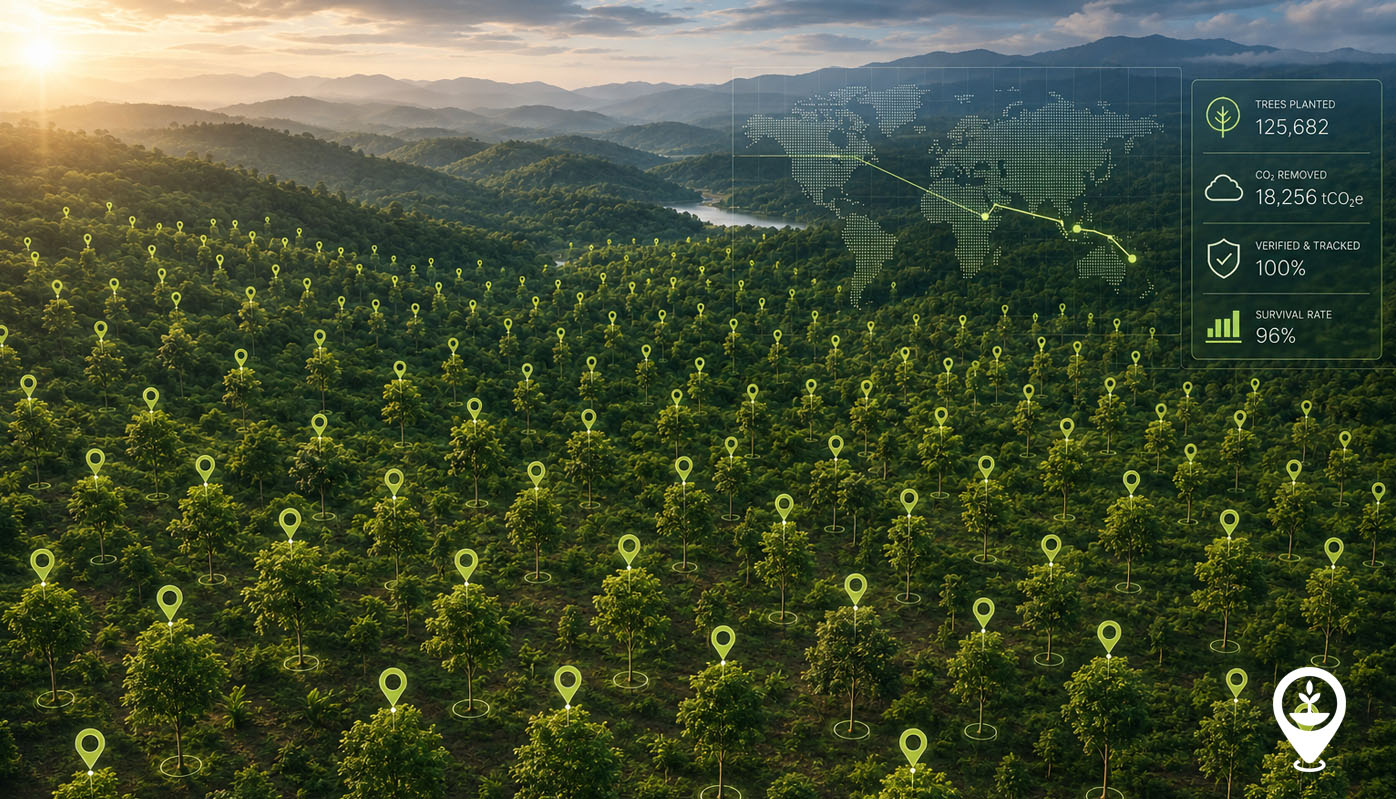
This is where EcoMatcher adds a complementary layer of transparency. Instead of showing stakeholders only a project boundary on a map, EcoMatcher connects them to individual planting records, including a tree photograph, its recorded location, species, planting date and the planting organization.
These records provide documented evidence of planting and make the project more tangible. They do not independently verify carbon removals, additionality, permanence or wider social and biodiversity outcomes. Those claims require the relevant methodology, monitoring and assurance.
Tree-level transparency strengthens the project evidence base in several practical ways:
- Recorded location: Each mapped tree has GPS coordinates that show its recorded planting location.
- Species data: Field teams record the species of each mapped tree, supporting visibility into the planting mix.
- Stewardship records: Tree data can be linked to the local planter and tree-planting organization responsible for implementation.
- Visual evidence: Time-stamped photographs document each mapped tree at the time of planting.
- Ongoing monitoring: For eligible projects, structured monitoring reports and, where available, drone imagery can provide additional visibility into how a forest develops over time.
Together, these records help sustainability teams, auditors and stakeholders understand what was planted and where. Companies can use the information to support internal decisions and communications, provided each claim remains proportionate to the evidence available.
The result is not a substitute for carbon certification. It is a clearer, more human connection to the physical project behind the carbon accounting.
TREES+: Certified Removals with Tree-Level Transparency
EcoMatcher’s TREES+ is designed for organizations integrating nature-based removals into long-term climate strategies. It combines projects certified under Verra or Gold Standard with EcoMatcher’s additional layer of mapped and photographed tree records.
1. Stronger Evidence for Carbon Claims
Regulators, investors, auditors and customers are scrutinizing environmental claims more closely. Certification and independent verification provide the basis for carbon claims, while transparent field records help companies explain the underlying project with greater clarity.
2. Clearer Visibility into Wider Project Value
Well-designed reforestation and agroforestry projects can support livelihoods, habitats, soils and watersheds. Tree-level data can show planting activity and species information, but companies should report broader outcomes only when those benefits are separately measured or verified.
3. More Tangible Stakeholder Engagement
A carbon credit can feel abstract. A mapped tree with a photograph, species, location and planting organization gives employees, customers and other stakeholders something concrete to explore. That visibility can make a carefully substantiated climate strategy easier to understand.
The Road Ahead: Connecting Capital, Data and Nature
Nature-based carbon removal can become more investable when credible standards, sound governance, independent verification and transparent field evidence work together. Each element addresses a different part of the trust challenge.
For companies, the practical question is no longer simply whether to purchase carbon credits. It is whether the project, the accounting and the claims can all withstand scrutiny.
TREES+ brings those layers together: certified nature-based carbon removals, independent verification and tree-level transparency that stakeholders can see and understand. Explore TREES+ or speak with EcoMatcher about building a transparent carbon-removal portfolio.