

From Sustainable Travel to Regenerative Travel
Sustainable travel has been the dominant framework for ethical tourism since the 1990s. It produced certification schemes, carbon offset markets, eco-lodge standards, and a wave of consumer awareness. It did not, by most measures, produce a healthier relationship between tourism and the places it depends on.
Emissions from the sector kept rising. Overtourism got worse. Economic benefits continued to concentrate in the hands of large international operators rather than host communities. The framework was not wrong so much as insufficient. It was designed to reduce harm, not repair it.
Regenerative travel starts from a different premise: that a visit should leave a place better off than it found it, ecologically, economically, and culturally. The concept is borrowed from regenerative agriculture, which focuses on restoring soil health rather than simply farming with fewer chemicals. Applied to tourism, it shifts the measure of success from “did we do less damage” to “did we contribute something of lasting value.”
Sustainable travel ran out of road
The core problem with sustainable tourism is that it accepts the industry’s basic structure and tries to make it less harmful within that structure. The model, which was based on large volumes of travelers moving to a small number of desirable destinations, remained intact. Sustainability initiatives worked at the margins.
Tourism accounts for approximately 8–10% of global greenhouse gas emissions, including those from aviation, accommodation, and tourist activities. That share has grown, not shrunk, during the period when sustainable tourism became an industry standard. Visitor numbers to hotspots such as Machu Picchu, Dubrovnik, Kyoto, and the Galápagos Islands increased sharply throughout the 2010s, with or without sustainability certification.
The economics compounded the environmental problem. In many developing-country tourism economies, up to 80% of visitor spending exits the destination country through foreign-owned airlines, hotel chains, and tour operators. Host communities receive a fraction of the revenue generated from their landscapes, coastlines, and cultures. Sustainability labeling did little to change where the money went.
What regenerative travel requires
Regenerative travel is a set of principles that asks more of both travelers and operators than sustainable tourism ever did.
Active contribution
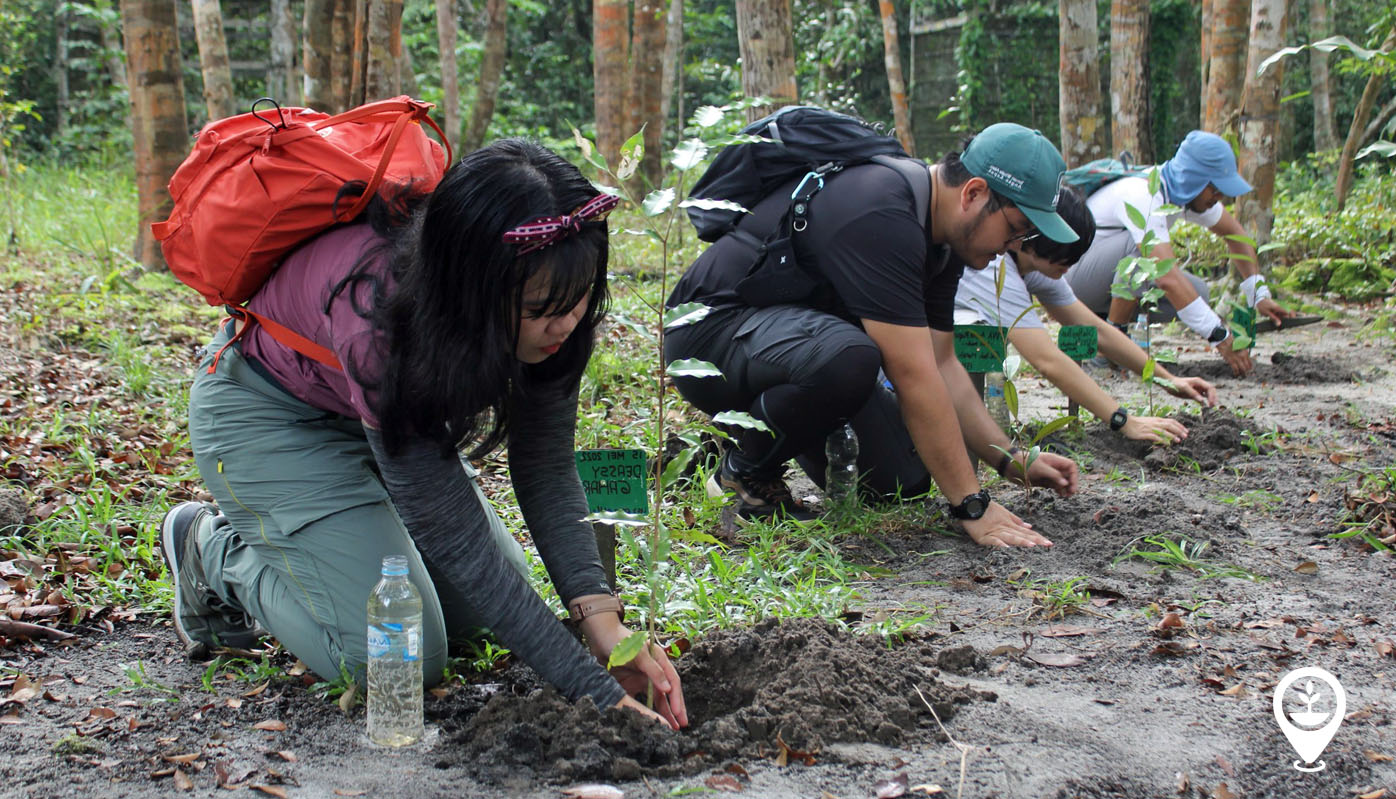
Sustainable travel asked visitors to limit negative behavior: do not touch the coral, do not drop litter, and offset your flight. Regenerative travel asks something more active. It encourages visitors to plant trees, support local conservation, back community-owned businesses, and take part in ecological restoration.
This is where EcoMatcher can give the idea real operational form. Travel companies can integrate transparent tree planting into bookings, loyalty programs, welcome gifts, or post-stay engagement. Each tree can be tied to a real location, species, and local planter, turning active contribution into something guests can actually see and follow over time.
Some operators in Iceland now build reforestation sessions into their itineraries, with guests working alongside local ecologists on degraded land. In Costa Rica, community-run conservation corridors are partly funded through tourism revenue, with visitors directly supporting anti-poaching work and habitat restoration.
Community sovereignty
Regenerative travel is only meaningful if the community being visited controls the terms of the visit: what is offered, at what price, to how many people, and for what purpose.
Bhutan provides the clearest example at national scale. The government charges a Sustainable Development Fee of USD 100 per night for most international visitors, with the revenue channeled into healthcare, education, and conservation. Bhutan maintains carbon-negative status, with forests covering more than 70% of its territory, protected under a constitutional requirement. The country accepts fewer visitors than it could and charges accordingly.
In Aotearoa New Zealand, Māori-led tourism operators have restructured visitor access to cultural and natural sites so that the tribal community iwi sets the terms. What is shared, what is withheld, and where revenue goes are decisions made by the custodians of the land, not by outside operators. First Nations tourism ventures in Canada’s British Columbia and Aboriginal-run programs in Australia’s Northern Territory follow comparable models. These represent a coherent alternative to the standard tourism supply chain.
Scale discipline
High-volume, low-cost tourism and regenerative outcomes are largely incompatible. Regenerative travel tends toward fewer visitors, longer stays, and higher per-visitor economic contribution to local communities. This is Bhutan’s explicit logic. It is also the implicit logic of community homestay networks in places like rural Rajasthan, the Mekong Delta, and the Ethiopian highlands, where visitors spend directly with families rather than through intermediary operators.
The greenwashing problem
As with sustainable travel before it, regenerative travel is already being adopted as a marketing language faster than as a practice. Tour operators use the term without clear definitions or external verification. No globally recognized standard for regenerative travel currently exists, which leaves the concept open to the same misuse that degraded “eco-tourism” and “sustainable” as meaningful signals.
A 2023 European Commission study found that 42% of green claims made by tourism and travel companies were exaggerated, misleading, or unverifiable. Without binding standards, regenerative is likely to follow the same trajectory: widely claimed, rarely verified, and gradually emptied of meaning.
The development of a credible third-party certification framework is the sector’s most pressing structural need. Several organizations, including the Travel Foundation and the Global Sustainable Tourism Council, are working toward standards. Progress has been slow.
Managing access and equity
Regenerative travel, as currently practiced, is expensive. Bhutan’s fee structure, conservation lodges in East Africa, Indigenous-led experiences in remote parts of Canada or Australia, and the like are not accessible to most travelers. If the model scales only within premium markets, it will remain a marginal influence on global tourism rather than a genuine shift in how the industry operates.
Slow travel, which involves longer stays in fewer places and using ground transport where possible, is one way to move toward regenerative principles without premium pricing. Longer stays increase per-visitor economic contribution to local economies and reduce the per-day carbon cost of reaching a destination. It also tends to produce more substantive engagement with the places visited, which is the point.
The final word
The distance between sustainable and regenerative travel is not primarily philosophical; it is operational.
Sustainable travel asked the industry to improve existing practices. Regenerative travel asks for different ones: new relationships with communities, new ways of directing money, different measures of success, and often a willingness to accept lower visitor volumes in exchange for greater per-visit impact. For EcoMatcher, that creates a practical opportunity to help travel and hospitality brands embed restoration into the travel experience in a way that is measurable, engaging, and connected to real people and places.
Some destinations and operators have already started making that shift, but most have not. That is why regenerative travel matters now. It addresses the structural failures that sustainable travel left in place: economic leakage, volume dependency, and limited community control over what tourism does to a place. If regenerative travel is going to move beyond rhetoric, it needs tools that make restoration tangible, transparent, and easy to integrate into real business models. Verified, locally grounded, and trackable tree planting can help make that shift visible.