

Positive Climate News: 2025 Round-up
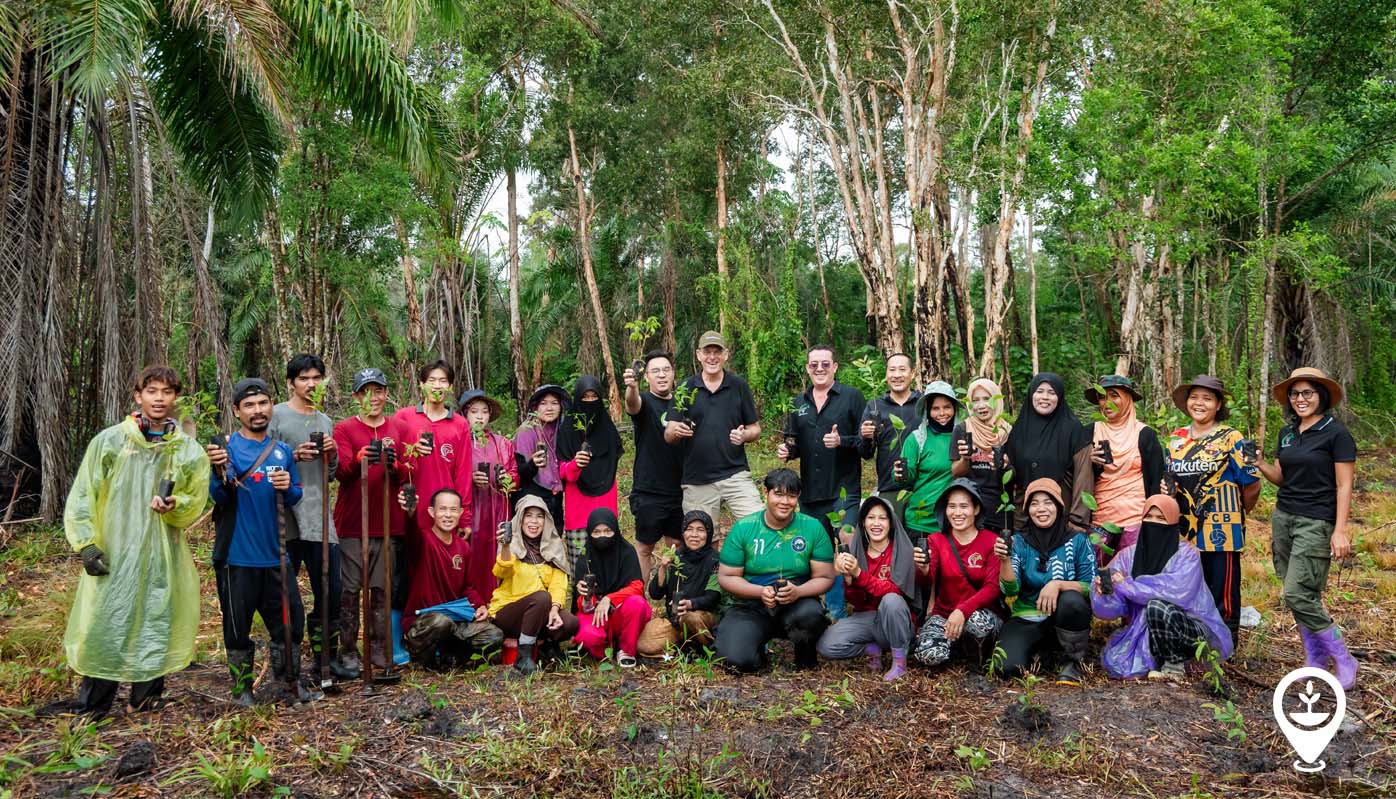
As we work together to restore forests and combat climate change, it’s important to pause and celebrate the progress being made around the world.
While challenges remain, 2025 has brought us remarkable milestones that prove collective action works. Here are ten pieces of positive climate news that gave us hope this year.
1. Renewables overtake coal globally for the first time
In a historic turning point for our planet, the first half of 2025 saw renewable energy generate more electricity globally than coal for the very first time. This milestone, driven largely by rapid growth in China and India, represents decades of investment, innovation, and advocacy finally bearing fruit.
The shift from coal—the dirtiest fossil fuel—to clean energy sources marks a fundamental transformation in how humanity powers itself. Every solar panel installed and wind turbine spinning brings us closer to a world where clean air is the norm, not the exception.
2. United States reaches renewable energy Milestone
March 2025 will go down in history as the month when renewable energy provided more electricity to the U.S. grid than fossil fuels for the first time ever.
Clean energy delivered 51% of electricity compared to fossil fuels’ 49%, making it a symbolic tipping point that seemed impossible just a decade ago. This happened at the start of the spring shoulder season, where milder temperatures ensure less energy spent on heating and cooling homes.
3. Historic ocean protection treaty enters force
The oceans are Earth’s lungs, producing half the oxygen we breathe and absorbing vast amounts of carbon dioxide.
On September 19, 2025, Morocco became the 60th country to ratify the High Seas Treaty, triggering its entry into force in January 2026. This landmark agreement will protect marine biodiversity in international waters covering nearly two-thirds of the world’s oceans—areas that until now existed in a regulatory vacuum.
The treaty establishes a framework for creating marine protected areas, conducting environmental impact assessments, and ensuring that the benefits of ocean resources are shared equitably.
4. Green sea turtles upgraded from Endangered to Least Concern
Green turtles have been upgraded from Endangered to Least Concern status by the IUCN after decades of global conservation efforts.
Once hunted extensively for soup, eggs, and shells, the species has rebounded thanks to beach patrols, egg protection, hatchling releases, and fishing net modifications. The latest assessment found that green turtle populations have recovered by 28% over historical counts made during the 1970s and ’80s, with an estimated 538,763 clutches of eggs laid during 2024.
5. European Union mandates climate education
Knowledge is power, and the EU took a significant step in 2025 by committing to include climate education in school curricula across member states. This decision means that 152 countries now include climate education in their national commitments under the Paris Agreement.
By equipping the next generation with climate literacy, we’re ensuring they understand both the challenges we face and the solutions within reach. These educated young people will become the environmental leaders, innovators, and policymakers who will continue the fight for our planet’s future. And they’ll understand why initiatives like tree planting are so crucial to climate stability!
6. Finland nearly completes coal phase-out ahead of schedule
Finland demonstrated that ambitious climate goals can be exceeded when it closed its Salmisaari coal power plant in Helsinki on April 1, 2025. This closure brought coal’s share of the country’s energy mix below 1%, achieving a near-complete phase-out four years ahead of schedule.
Finland’s success shows that determined national action can accelerate the transition away from fossil fuels faster than initially planned. The country’s experience offers valuable lessons for other nations looking to rapidly decarbonize their energy systems while maintaining energy security.
7. Mexico’s jaguar population surges 30%
Between 2010 and 2025, Mexico’s jaguar population increased by 30%, from 4,100 to 5,326 individuals. This growth resulted from a comprehensive conservation effort involving 920 motion-sensor cameras across 15 states.
Key factors include protected habitats, reduced human-wildlife conflict, and heightened public awareness, with the largest number found in the Yucatán Peninsula region (1,699).
8. We’ve had record-breaking global renewable capacity growth
The renewable energy revolution continued to accelerate in 2025, with the world adding 510 gigawatts of renewable power capacity in 2024 and expecting another 520 GW in 2025. This was led by China, the US, Europe and India.
To put this in perspective, renewables now account for over 90% of all new global power capacity additions. Solar and wind energy are leading this surge, with costs continuing to fall and installation times shortening.
This exponential growth demonstrates that the clean energy transition is speeding up. Each gigawatt of clean energy reduces the demand for fossil fuels and helps stabilise the climate, complementing natural climate solutions like forest restoration.
9. China sees unprecedented solar installation boom
In May 2025 alone, China installed 93 gigawatts of solar capacity and 26 gigawatts of wind capacity—enough renewable energy to power the entire country of Poland. China’s total installed solar capacity has now surpassed 1,000 GW, representing half of the world’s total solar capacity.
While China remains the world’s largest emitter, its leadership in clean energy deployment shows what’s possible when manufacturing capacity, policy support, and investment align. This rapid scaling is driving down global costs for renewable technology, making it more accessible for countries everywhere.
10. Scotland’s wildcats return from the brink
Conservation success stories remind us that when we protect and restore nature, life bounces back.
Over 35 critically endangered Scottish wildcats have been released into Cairngorms National Park since 2023, with at least five new litters born in 2025. This breeding program marks a significant milestone in saving a species that once numbered only around 35 individuals in the wild.
The wildcat’s recovery demonstrates that targeted conservation efforts work—a principle that applies equally to forest restoration. When we give nature the space and protection it needs, remarkable recoveries become possible.
Looking forward with hope
These ten stories represent just a fraction of the positive climate action happening worldwide in 2025. From technological breakthroughs to policy victories, from ecosystem restoration to clean energy records, the momentum is building.
At EcoMatcher, we see our tree-planting work as part of this larger group of climate solutions. Trees are nature’s technology for carbon capture—they clean our air, stabilize our climate, protect biodiversity, and restore degraded landscapes. As renewable energy transforms our power systems and policies shift to protect our planet, restored forests will play an essential role in creating the healthy, balanced Earth we all want to leave for future generations.
Join us in taking action—whether through planting trees, supporting clean energy, or simply spreading awareness that progress is possible when we work together.