

Everything You Need to Know About Blue Carbon
When we picture carbon-capturing ecosystems, we typically imagine towering trees and lush green forests. But some of the planet’s most powerful climate allies exist not on dry land, but in the dynamic space where land meets sea. These coastal and marine ecosystems—mangrove forests, salt marshes, and seagrass meadows—store what scientists call “blue carbon,” and they’re quietly doing extraordinary work in the fight against climate change.
Blue carbon represents the carbon captured by ocean and coastal ecosystems, and understanding its importance is crucial as we search for every possible tool to address the climate crisis. These ecosystems may not have the towering presence of redwoods or rainforests, but their carbon-storing capabilities are nothing short of remarkable.
What makes blue carbon special
Blue carbon ecosystems function differently from their terrestrial counterparts. While land-based forests store most carbon in wood and leaves, coastal ecosystems accumulate the vast majority of their carbon below ground, in deep layers of sediment and soil. This happens through a fascinating process: as plants photosynthesize, capturing CO2 from the atmosphere, their leaves, roots, and other organic matter eventually settle into the waterlogged soils beneath them.
Here’s where the magic happens. These sediments are saturated with water and low in oxygen, creating conditions where organic matter decomposes extremely slowly. Instead of breaking down and releasing carbon back to the atmosphere as it would on dry land, the plant material gets buried deeper and deeper over time, with new layers accumulating on top. This process continues for centuries, even millennia, creating carbon stores that are both dense and durable.
The numbers reveal just how effective these ecosystems are. Despite covering less than 2% of the ocean floor, coastal ecosystems store more than half of all carbon buried in ocean sediments. Even more impressive, blue carbon ecosystems can sequester carbon up to 40 times faster per unit area than terrestrial forests, making them among the most carbon-dense ecosystems on Earth.
Three coastal carbon champions
Blue carbon ecosystems come in three main types, each adapted to specific coastal conditions.
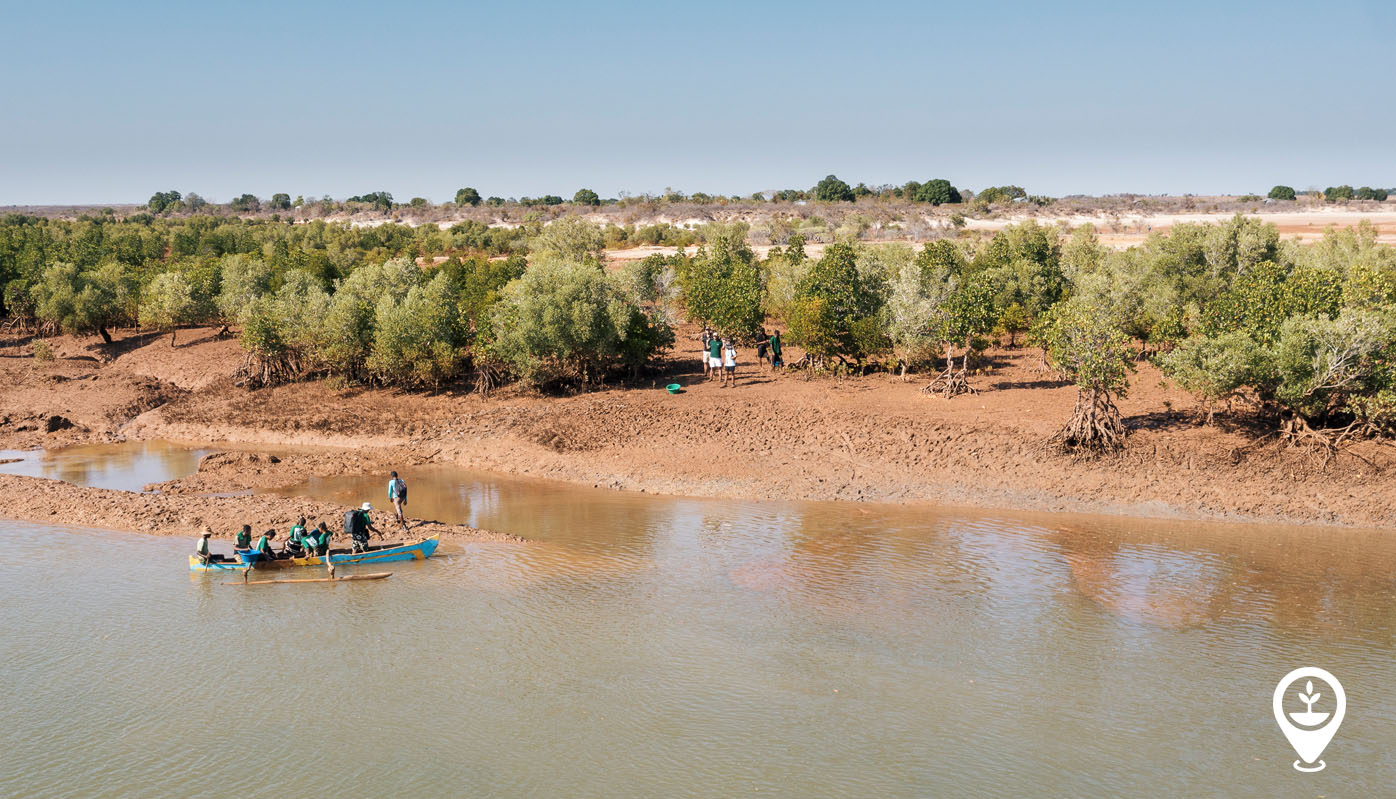
Mangrove forests grow in tropical and subtropical regions where freshwater rivers meet the sea. These remarkable trees have adapted to thrive in salty, oxygen-poor soils, developing specialized root systems that allow them to breathe even when submerged by tides. Mangroves typically fringe coastlines, estuaries, and lagoons in regions such as Southeast Asia, West Africa, and Central America. Their dense root networks trap sediment and organic matter, creating thick carbon-rich soils that can extend several meters deep.
Salt marshes flourish in temperate coastal zones, dominated by grasses, rushes, and herbaceous plants rather than trees. You’ll find them along the coasts of North America, Europe, and other temperate regions, where they form a transitional zone between land and sea. These grassland-like ecosystems may look modest, but their below-ground productivity is extraordinary. Their extensive root systems and the constant accumulation of plant material create deep carbon stores in muddy sediments.
Seagrass meadows are underwater flowering plants—not algae or seaweed—that grow in shallow coastal waters worldwide. These marine grasslands can extend for miles along coastlines and around islands, creating vast underwater prairies. Seagrasses capture carbon through photosynthesis just like land plants, and their leaves slow water movement, causing suspended organic particles to settle out and accumulate in the sediment below.
A crisis unfolding
Despite their value, blue carbon ecosystems are disappearing at an alarming rate. Research indicates that 340,000 to 980,000 hectares of coastal wetlands are lost globally each year, driven by coastal development, aquaculture expansion, pollution, and dredging. Mangroves face particular pressure, as they are cleared for shrimp farms and beachfront development. Salt marshes are drained for agriculture or filled for construction. Seagrass meadows are damaged by boat propellers, smothered by coastal pollution, and degraded by sediment runoff.
When these ecosystems are destroyed, the consequences extend far beyond lost habitat. The carbon that took centuries to accumulate can be released back into the atmosphere within years or decades as the exposed sediments dry out, oxidize, and decompose. A destroyed mangrove forest or drained salt marsh doesn’t just stop capturing new carbon—it becomes a carbon source, releasing its ancient stores and contributing to the very problem it once helped solve.
The scale of this loss translates to significant emissions. Degradation and conversion of coastal ecosystems release up to 1 billion tonnes of CO2 annually, equivalent to the emissions from about 200 million cars. Every hectare of blue carbon ecosystem we lose is a setback in the fight against climate change.
Benefits beyond climate mitigation
Blue carbon ecosystems deliver benefits that extend well beyond climate mitigation. They’re nature’s coastal defense systems, buffering shorelines from storm surges, waves, and erosion. As sea levels rise and storms intensify due to climate change, these natural barriers become increasingly valuable, protecting coastal communities and infrastructure that would cost billions to defend with engineered solutions.
These ecosystems also serve as biodiversity hotspots. Mangrove roots provide nursery habitat for juvenile fish, shrimp, and crabs, supporting fisheries that millions of people depend on for food and livelihoods. Salt marshes host countless invertebrates and provide crucial stopover habitat for migratory birds. Seagrass meadows support marine life from tiny seahorses to massive manatees and sea turtles.
The water quality benefits are substantial, too. These ecosystems filter pollutants, trap sediments, and process excess nutrients that would otherwise degrade coastal waters. They’re living water treatment systems that work continuously at no cost.
Recognition and opportunity
The good news is that blue carbon is gaining recognition in climate policy and conservation circles. International frameworks, such as the Paris Agreement, now acknowledge the role of coastal ecosystems in climate mitigation. Blue carbon restoration projects are being developed that generate carbon credits, creating economic incentives to protect and restore these habitats.
Several countries have incorporated blue carbon into their national climate commitments. Restoration efforts are underway worldwide, from mangrove replanting in Indonesia and Senegal to salt marsh restoration along the coasts of Europe and North America. These projects demonstrate that recovery is possible when we invest resources and political will.
Expanding the mission
For organisations focused on reforestation, blue carbon represents a natural extension of mission and expertise. Many tree-planting groups now include mangrove restoration in their portfolios, recognizing that these coastal forests deserve the same attention as their terrestrial cousins.
The principles translate well: understanding local ecosystems, engaging communities, ensuring long-term protection, and monitoring growth and survival. However, working in tidal environments presents unique challenges—from navigating salt water and muddy conditions to timing planting around tides and working with coastal landowners and fishing communities.
The most successful blue carbon projects combine restoration with protection of existing ecosystems, recognizing that preventing loss is often more effective and cost-efficient than restoration after destruction.
The final word
Supporting blue carbon doesn’t require living on a coast. We can back organizations working on coastal restoration, advocate for policies that protect marine and coastal areas, and reduce the pollution and carbon emissions that degrade these ecosystems. Choosing sustainable seafood supports the fisheries that depend on healthy coastal habitats, creating market pressure for their protection.
The climate solutions we need exist not just in the forests we can walk through, but in the muddy, tidal spaces where salt water meets land. Blue carbon ecosystems remind us that nature’s tools for addressing climate change are diverse, powerful, and often found in unexpected places.